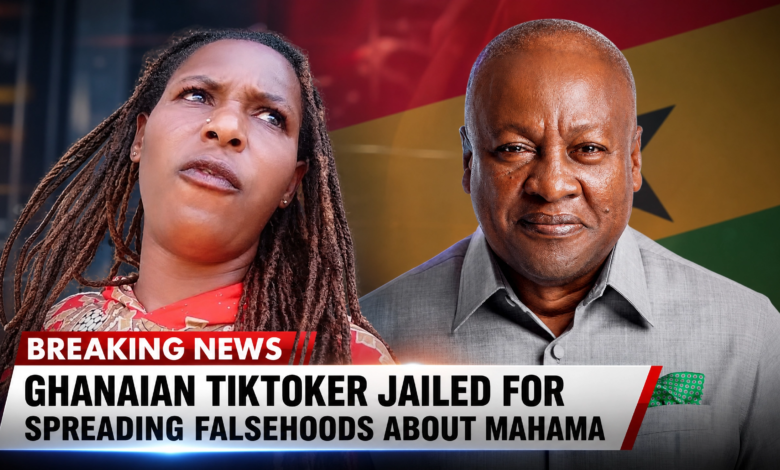

Accra, Ghana – In a landmark ruling that has sparked widespread discussion across Ghana, popular TikToker Camilla Alhassan has been sentenced to one year in prison for offensive conduct and publishing false news. The verdict, delivered by an Accra Circuit Court, follows her admission of guilt regarding claims she made about President John Dramani Mahama.
The Allegations: 32 Cows and Political Rituals
Camilla Alhassan gained notoriety on social media for a video in which she alleged that President Mahama had buried 32 cows across Ghana’s 16 regions as part of ritualistic practices to secure victory in the upcoming 2024 general elections. These claims, which lacked any verifiable evidence, quickly went viral, leading to significant public discourse and concern over the spread of misinformation.
Legal Proceedings and Verdict
The Ghana Police Service initiated an investigation into Alhassan’s claims, leading to her arrest. She was subsequently charged with offensive conduct conducive to breaches of the peace and publication of false news. During the court proceedings, Alhassan pleaded guilty to the charges.
On Thursday, July 16, 2026, the Accra Circuit Court handed down a one-year imprisonment sentence with hard labor. The court emphasized the importance of responsible social media use and the potential harm caused by disseminating unverified information, especially concerning public figures and national elections.
Implications for Free Speech and Misinformation in Ghana
This case has ignited debates about the boundaries of free speech in Ghana and the growing challenge of misinformation, particularly on social media platforms like TikTok. While many acknowledge the importance of holding individuals accountable for spreading falsehoods, concerns have also been raised about the potential chilling effect on legitimate criticism and expression.
Authorities have consistently warned against the spread of fake news, especially as the country approaches a crucial election period. This ruling serves as a stern reminder that individuals can face legal consequences for propagating unverified and potentially damaging information online.